-
HR zeblearnindia is an excellent institute it has many facilites these all are the thing which make HR zeblearnindia best HR practical training institute
-
HR training is essential for creating a productive and inclusive work environment, as well as ensuring that employees understand and adhere to company policies and procedures.
-
HR Zeblearn India in Noida is one of the best HR training in India ,provide 100% Practical Training for Recruitment, Core HR, Payroll, all the essential practical knowledge in Job portals, ATS, Statutory Compliance, Compensation Benefits, PF, PT, TDS, ESIC, Income Tax etc. which make you a perfect HR Leader.
-
Interning at an HR firm can be a valuable experience, as it provides an opportunity to gain practical experience in the field of human resources. It can offer insights into various HR functions such as recruitment, employee relations, training and development, and HR administration. Additionally, it can provide networking opportunities and help you gain a better understanding of the industry. However, the worth of the internship depends on your career goals and the specific opportunities available at the HR firm. It's important to research the firm and the potential learning experiences and mentorship opportunities it offers before making a decision.
-
People in HR, or Human Resources, are responsible for managing the human capital within an organization. This includes tasks such as recruiting, hiring, onboarding, training, performance management, employee relations, benefits administration, and ensuring compliance with employment laws and regulations. They also play a key role in fostering a positive work environment and addressing employee concerns. Additionally, HR professionals often contribute to strategic planning and organizational development to support the overall success of the company.
-
After that she went to him and told to give her money, mobile everything , Otherwise she will shout and tell everybody that he is harrasing and misbehaving with me.
-
By enrolling in these courses offered by Zeblearn India, you can acquire the knowledge, skills, and certifications needed to kickstart your career in the HR field in India. These courses are designed to provide practical, hands-on training that prepares you for various roles in HR, from entry-level positions to mid-level management roles. Zeblearn India's reputation for quality training and industry relevance makes it a reliable choice for individuals aspiring to pursue a career in HR in India.
-
Asuming that they are currently with the Performance Appraisal System then let us see how it will benefit the various HR functions that you asked for.
-
Overall, HR training can provide students with a solid foundation for a successful career in human resources management. Zeblearn India's comprehensive training programs, experienced instructors, and industry partnerships make it an excellent choice for students looking to pursue HR training and advance their careers in the field.
-
Zeblearn India offers high-quality SAP HR training that equips participants with the skills and knowledge needed to succeed in SAP HR roles. With its expert instructors, comprehensive curriculum, hands-on learning approach, flexible options, placement assistance, and certification, Zeblearn India is a top choice for SAP HR training in Noida.
-
In today's world HR courses have immense scope. It holds an essential position in companies. The whole functioning of the companies depend on them.
-
If you’re interested in ???????????????????????????????????????????????? to ???????????????????????????????????????? cutting-???????????????? software for the future, ???????????????????????????? the zeblearnindia team is a fantastic opportunity.
-
Hi guys i am student of SBMC institute. I love the best part of HR Training is that whole training was practically based , Here i learnt lots of practical things . I did my payroll and recruitment training with SBMC Team. SBMC Provides International training also, those who wants to move to Canada .
-
Ultimately, the type of training that will be most beneficial to you will depend on your specific career goals and areas of interest within HR.
-
HRM is used to implement several management ideas to help employees function effectively and efficiently in any firm. It improves a company's performance and production by determining how to use its people resources most effectively.
-
HR Certifications (like the SHRM-CP and -SCP, or the HRCI PHR and SPHR). These require passing exams that measure your ability to apply the knowledge you have, not just regurgitate it on an exam or in a paper. You’ll be challenged with complicated scenarios to which there is no truly right answer, only a best answer, as that’s the reality of working in HR
-
Specializing in finding and attracting the right talent for organizations. Working with organizations to improve their performance and efficiency. Dealing with the relationship between management and labor unions or employee representatives.
-
Human Resource Management national and local chapters. I studied for and successfully passed a four hour examination in Human Resources and received both SPHR and PHR certifications.
-
HR recruitment and learning and development roles can offer competitive compensation. HR recruitment often involves sourcing and hiring talent, while learning and development focuses on training and employee development.
-
I want to share the benefits of the MBA Strategic HR program at Chandigarh University. With its impressive ranking in the QS World University Rankings 2024 and an A+ accreditation from the National Assessment and Accreditation Council, the university offers an excellent platform for those interested in Strategic HR.
-
If you got the job like the guy who talked his way into being an airline pilot or a doctor, you’d find you were short on actual knowledge for it and that would fairly soon become apparent to people dealing with you on specific HR problems
-
By enrolling in these courses offered by Zeblearn India, you can acquire the knowledge, skills, and certifications needed to kickstart your career in the HR field in India.
-
I would assume that if the company put it in writing that they will honor that promise,
That assumes the Immigration service will approve an H-1b visa because there is such a shortage of HR talent in the US (note the sarcasm)
-
The single most popular specializations amongst MBA graduates in India, Marketing is a hard-core front-end job and is meant for leaders.
-
Through LinkedIn, emails etc. But if you want to connect with HR directly who have posted opportunities (I’m assuming you want to connect for job opportunity) on the job platforms, it is very hard as most of the platforms don’t give you option to connect. But I think some startups like Hirect & COLCO allows you to connect with them very easily.
-
You have not been offered the job yet. You haven’t received any official, written employment contract.
HR has offered you training. If you pass the training, there may be an official, written job offer. But at this point, there has not been any official job offer that covers salary, start-dates, job expectations or employment contracts.
-
Learning Microsft Excel is a must. Some key functions should be known to you Hlookup,Vlookup. Report generation becomes a lot easier.
-
Learning and Development (L&D) and Human Resources (HR) are two distinct functions within an organization, but they both play critical roles in employee development and well-being.
-
It's important to note that no specific placement rate can be universally applied to all SAP HR training programs, as outcomes depend on multiple variables. Before enrolling in an SAP HR training course, it's advisable to research the program thoroughly, including its track record of placing graduates in relevant positions. Additionally, speaking with alumni or individuals who have completed the same course can provide insights into placement success and the overall quality of the training program.
-
For HR freshers, the best certification to consider is the Professional in Human Resources (PHR) certification. This certification is recognized as a valuable credential for those entering the HR field. It covers essential HR knowledge and skills, making it a strong foundation for a career in human resources. Additionally, the Society for Human Resource Management (SHRM) offers the SHRM Certified Professional (SHRM-CP) certification, which is also highly regarded in the industry. Both certifications can enhance your qualifications and demonstrate your commitment to the HR profession.
-
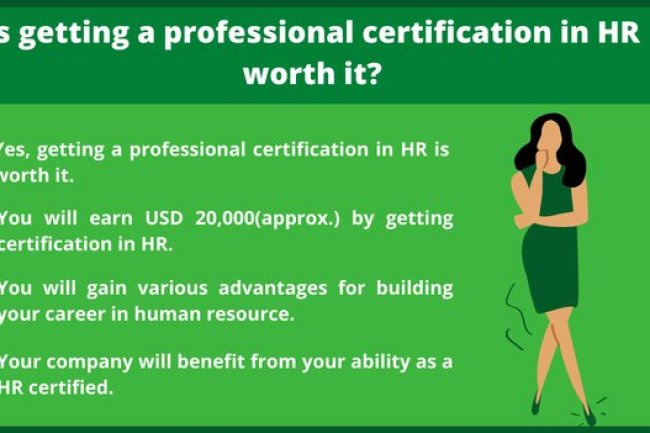
HR certification allows you to illustrate your knowledge and expertise in human resource. There are many HR certifications that are available in the market. It does not matter how much work experience you have, there are different certifications available according to your work experience.
-
There are several reputable HR training centers in India, and the "best" one can depend on specific factors such as location, course offerings, and individual preferences. Some well-known HR training centers in India include the Indian Institute of Management (IIM) and the Xavier School of Management (XLRI). It's important to research and compare different centers based on your specific needs and goals to determine which one is the best fit for you.
-
The value of the program ultimately depends on your specific career goals, current skill set, and learning preferences. To determine if it's worth it for you, consider the program's curriculum, faculty expertise, industry recognition, alumni reviews, and potential career advancement opportunities.
-
As someone who built a training product in 2016, I spent months figuring out what people wanted. Training managers typically gave business-focused responses, but the discussions turned emotional with most employees I interviewed. Here are some of the problems they brought up
-
Expressing anger to or suing either of those employers is a bad idea. You may be correct that requesting and receiving reimbursement for expensive training you received shouldn’t be a reason for HR not confirming dates of employment.
-
Human Resources I became a member of the Society for Human Resources. The professional organization offered certification program courses and testing. I studied after work for a year and successfully earned my PHR certification.
-
India is home to several reputable HR training institutes, and the best institute for HR training can depend on various factors such as location, specific HR focus, and individual preferences. Some well-regarded HR training institutes in India include the Indian Institute of Management (IIM) and the Xavier School of Human Resource Management (XSHRM). It's important to research and consider factors such as accreditation, faculty expertise, alumni network, and program offerings when choosing an HR training institute.
-
Working in an HR consulting firm as a recruiter can be a good idea for individuals who enjoy working with people, have strong communication skills, and are interested in talent acquisition and human resources. It can provide valuable experience in assessing candidates, conducting interviews, and understanding the needs of different organizations. However, like any career path, it's important to consider your own strengths, interests, and long-term career goals before pursuing this opportunity.
-
HR is a great sector to enter with many job opportunities available around the world. There are also plenty of different ways to enter the field and a dedicated diploma would certainly help you achieve your ambitions.
-
Overall, ongoing training in these and other areas can help HR staff stay current, build their skills, and contribute to the success of their organization.
-
It was a wonderful learning experience, and greatly expanded my overall knowledge of many facets of human resources operations.
-
However, more complex work involving reasoning and variable conditions, requires knowledge and understanding. For such work, “JDT" can be frustrating for everyone.
-
The role of Human Resources (HR) management in corporate training activities within organizations is pivotal for fostering employee development and organizational growth. Zeblearn India recognizes the significance of HR's involvement in training initiatives and offers comprehensive support in this area. Here's how HR management contributes to corporate training activities, aligned with Zeblearn India's approach.
-
Attend industry events, join professional HR associations, and connect with professionals in the field to expand your network and learn about job opportunities.
-
While having an MBA-HR provides a solid foundation in human resource management principles, acquiring additional technical skills can enhance your capabilities and competitiveness in the HR field. Here are some tech skills that HR professionals can benefit from, along with recommendations from Zeblearn India for training programs
-
Remember, internships are primarily about gaining experience and building your professional network. While a higher salary is desirable, it's important to consider the overall value of the opportunity. Ultimately, the decision should be based on a balance between financial considerations and the potential for growth and learning in your chosen field.
-
I'm unable to provide specific recommendations for training institutes, but I can suggest some criteria to consider when evaluating SAP HR training providers in Hyderabad. Look for institutes with a strong reputation, experienced instructors, comprehensive curriculum, practical hands-on training, placement assistance, and positive student reviews. It's also important to ensure that the institute is authorized by SAP or affiliated with reputable industry organizations. Additionally, consider factors such as location, class timings, and fees to find the best fit for your needs.
-
You have just identified a gap in your management training program. So - now, add the appropriate training directly associated with that situation. This will fill the gap and the team is better prepared for next time.
-
It has become most common and continuous task in any organisation for updating skills and knowledge of employees in accordance with changing environment.
-
Some popular options include SHRM (Society for Human Resource Management) India, NHRD (National HRD Network), and HRD Academy.
-
Many of the certifcation bodies require that you take their courses and go to their conferences and pay annual dues to keep up the cert. I found most of the time their conferences were more a showcase for vendors and consultants rather than a learning experience.
-
You might not be aware of it, but this module is ???????????????????????????????? by numerous ???????????????????????????? ???????????????????? all around Joining zeblearnindia is a fantastic ???????????????????????? to be a part of a lively and inventive team where your skills and ???????????????????? will be acknowledged and used to ???????????????????????????? ???????????????????????????????????????? solutions and ????????????????????????????????.
-
Well, SAP HR is one of the most important modules that hold a lot of value in managing an organization properly. This article would cover the advantages, future scope and how a candidate can learn this course respectively.
-
The number of years of experience required to become a human resources (HR) professional can vary based on the specific position and organization. Entry-level HR positions may require little to no prior experience, while more senior roles such as HR manager or director may require several years of relevant experience, often ranging from 5 to 10 years. Additionally, obtaining professional certifications such as SHRM-CP or PHR can also contribute to meeting experience requirements
-
It is obviously possible to become an HR manager even if you did your MBA in any other field. Well you have to start small and you have to know the technicalities as well, you have to have the knowledge about the functionalities of an HR, right from Payroll processing to recruitment.
-
I'm not able to provide real-time information on specific businesses, including HR training companies in Mohali. However, you can consider researching online for HR training companies Zeblearn.com in Mohali and look for reviews, ratings, and testimonials to determine which one may be the best fit for your needs. Additionally, reaching out to industry professionals or local business networks in Mohali could also provide valuable insights and recommendations.
-
HR reporting plays a critical role in evaluating training and development initiatives within organizations. It measures the impact of training programs through post-training assessments, skill evaluations, and performance reviews. HR reporting identifies skill gaps, enabling targeted training to enhance overall performance. Tracking employee participation provides insights into engagement levels and interest, while calculating the Return on Investment (ROI) assesses training effectiveness.
-
-
The purpose of an internship is to provide real world experience that enables you to put everything you’ve learned into action. Internship help you to gain or learned skills that can be applied to future jobs.
-
Transitioning from recruitment to HR operations can be a great career move. Here are some steps you can take to make this transition
-
My general overview: there is a lot of competition in HR and you really need to keep on learning new things, etc. to stand out. It would be complicated without relevant education.
-
Some popular platforms offering free HR courses include Coursera, edX, and LinkedIn Learning. I recommend exploring these platforms and their course offerings to find the one that best fits your needs.
-
After completing a Master's in Human Resource Management (MHRM) in Canada, you have various options to further enhance your career prospects and expertise in the field of HR or related areas. The choice of a post-graduate course will depend on your career goals and areas of interest. Here are some potential courses you can consider
-
They also shared their working experience as Hr generalist, so students can get actual scenario of organizational operations of Hr.
-
It's important to research and choose courses that align with your career goals and the specific needs of the organizations you aspire to work for. Additionally, consider seeking out courses that offer certifications or credentials recognized in the HR field.
-
I also did my online SAP Training from here. I am from mumbai, but I am residing in banglore since last 23 years.
-
HR Generalist certification course,since i am an MBA in HR and Marketing,i always wanted to be in HR Domain and i decided to take up certification course from Pace Career Academy,Bangalore.
-
For these needs, you can utilize the Connecteam app because of its diverse features while also being easy to use. It has the tools for employee onboarding, providing effective training experience, management of tasks/schedules, communication, and even monitoring daily operations of a company or business in real-time. This is why it is considered to be an all-in-one app and is cost-efficient making it perfect for us which is why you can also consider using it.
-
It was a wonderful learning experience, and greatly expanded my overall knowledge of many facets of human resources operations.
-
HR Generalist certification course, since i am an MBA in HR and Marketing, i always wanted to be in HR Domain and i decided to take up certification course from Pace Career Academy
-
professional and respectful demeanor throughout the conversation, and be prepared to negotiate and find a solution that works for both you and the company. Effective communication and problem-solving skills are key in resolving such situations amicably.
-
Having trained myself and still continuously seeking more ways to develop myself, my expectations of HR and from myself are set very very high.
A person who studies HR is not a specialist until their raise their own standards of excellence and keep mastering new things every day. It takes time and effort, but it is possible.
-
HR Generalists in an accounting firm have no clue about the basics of accounting but they are somehow capable of being an orbiter in deciding who moves forward in the interview process.
-
-
I have been teaching these basic courses both internally and as a consultant for the past 10+ years with positive feedback on the relevancy of the topics.
-
As for further qualifications, it’s a risk going to the trouble for them. I got a “European Computer Driver’s Licence Course” under my belt to help with my employability, and it basically made no difference to my job applications. I was still getting endless rejections. I have had further HR qualifications since, but only after getting into the job sector, and getting an employer to pay for them.
-
Yes, it is definitely possible to change careers from finance to HR. Many skills gained in finance, such as analytical thinking and financial acumen, can be valuable in HR roles. However, a career change may require additional education or certifications in HR, as well as gaining relevant experience through internships or entry-level positions. Networking and seeking mentorship from HR professionals can also be beneficial during the transition. It's important to thoroughly research the requirements and expectations of the HR field to ensure a successful career change.
-
HR training is essential for creating a productive and inclusive work environment, as well as ensuring that employees understand and adhere to company policies and procedures.
-
Without a little more detail as to the actual job and its offer, the answer to your question can vary so this is purely speculative. The position, not you, is what is valued at $10/hour. If you feel you are valued more, then perhaps the job is not for you, and you should look for a role that fits the value you offer.
-
It is your business, not theirs.
The contract of employment essentially boils down to you purchasing a given amount of their time for a given amount of financial remuneration.
You have no grounds to complain if they fulfil their roles to your satisfaction in the time your purchase from them.
They, however, have grounds to complain if you want them to provide your business with time over and above the contracted amount.
-
Yes, it is ‘important’ to have education qualification that complements the work experience. I have also come across candidates with rich HR domain experience but with a different academic qualification who have become successful ERP consultants.
-
Yes, a science student can certainly pursue a career in human resource management. While a background in science may not be the most traditional path into HR, it can bring unique perspectives and skills to the field. Many aspects of science, such as data analysis, critical thinking, and problem-solving, can be valuable in human resource management. Additionally, there are often opportunities for further education or specialized training in HR for individuals with diverse academic backgrounds.
-
You can join any small organisation or BPO for the HR training. But it might not help you in the long run in order to succeed as an HR professional in your career. You might succeed as well, but you'll have to push extra hard for the same.
-
In summary, HR departments may prefer to explore alternatives to terminating employees, such as training or transfers, due to considerations related to cost-effectiveness, retention, legal compliance, employee development, and welfare. By adopting a holistic approach to employee management, HR aims to balance the needs of the organization with the well-being and development of its workforce.
-
Zeblearn India is known for its quality training programs, experienced instructors, and industry-relevant curriculum. With Zeblearn India, you can access practical, hands-on training that equips you with the skills and knowledge needed to advance your career in human resources. By enrolling in courses offered by Zeblearn India, you can stay ahead of the curve and position yourself as a valuable HR professional in today's competitive job market.
-
The easiest way to learn human resources management is to start with online courses or certifications. There are many reputable platforms that offer HR management courses, some of which are free. Additionally, reading books and articles on HR management, attending HR conferences and workshops, and seeking mentorship from experienced HR professionals can also be valuable for learning about human resources management.
-
Absolutely, obtaining a SHRM (Society for Human Resource Management) certification can be very beneficial for HR professionals. It demonstrates your commitment to the field, enhances your knowledge and skills, and can potentially lead to career advancement and higher earning potential. Additionally, it can provide you with a strong professional network and access to ongoing professional development opportunities. Keep in mind that the value of any certification depends on your specific career goals and the requirements of your current or desired employer.
-
Absolutely! Transitioning from training and development to HR recruiting is definitely possible. Your experience in training and development has likely provided you with valuable skills such as communication, interpersonal skills, and understanding of employee development, all of which are highly relevant to HR recruiting. You may want to consider highlighting any recruiting or talent acquisition aspects of your current role on your resume, as well as any relevant certifications or training you may have completed. Networking with HR professionals and seeking out mentorship or informational interviews can also be helpful in making the transition. Good luck!
-
The trap in diversity training is organizations trying to solve human discontinuities. Humans have been discriminating against other humans for as long as human history has been recorded. Organizations should view this type of conflict as a natural part of human experiences. Entire nations have not been able to solve the problem of interpersonal conflict, but many organizational leaders think that a class here or there will make the problem "go away".
-
HR teams must be trained. Training often improves HR team members' efficiency, competence, problem-solving abilities, recruiting and retention methods, and organizational challenges in their daily work.
-
You need help in implementing and you can also help people who need help in such implementations. I am not answering to tell you to use methods like Kanban or framework like Scrum. I am telling you to find small things that you can implement in your day job to see the results visibly.
-
SHRM – The Society for Human Resource Management has multiple courses and resources related to Human Resource Management and Recruitment.
-
Well, when i was going for the training or internship, they charged me for learning a language.
Well, it depends on company to company..
If you get placement from your collage side, so i guess then you dont have to pay for the money for training.
I regret till now that i had wasted my parent’s money.
I am depressed but seeing some side effects of depression, i keep myself cool and calm and will do hard work again to bring that all money which i losted.
-
zeblearnindia has series of courses that helps you master a skill. Human resources courses currently available are mentioned below
-
Firstly, it demonstrates a commitment to professional development and can enhance credibility in the field. Secondly, it provides a solid understanding of project management principles, which can be valuable when overseeing training programs or HR-related projects. Additionally, the PMP certification can help practitioners effectively manage and coordinate complex projects within HR and training departments, leading to improved efficiency and outcomes.
-
Zeblearn Technologies is the best for SAP HR ECC Course online training in Noiida in IT hub .Before searching for any best SAP HR ECC Course Training institute in Noida you should need to know what is SAP HR ECC?
-
about traditional methods and embrace the cosmic power of intergalactic HR training! But seriously, while I can't provide specific recommendations on HR programs in Dubai, I would suggest looking for programs that prioritize practical skills, real-world application, and continuous learning.
-
HR has to deal with people from various backgrounds, level of experience and skills on a day to day basis. It is not wrong to say that a business is as good as it’s employees and being an HR lets you influence many aspects of the business starting from acquisition of talent and its development to participating in strategic decisions.
-
Training typically refers to the process of providing specific skills or knowledge to employees to help them perform their current jobs more effectively. It often involves short-term, targeted programs aimed at improving specific competencies or job-related tasks.
-
There are several reputable institutes that offer training for HR generalists, including the Society for Human Resource Management (SHRM), the HR Certification Institute (HRCI), and various universities and colleges that offer HR programs. It's important to research each option to find the best fit for your specific needs and career goals. Factors to consider include accreditation, curriculum, faculty, and opportunities for practical experience or internships.
-
A training coordinator and an HR coordinator are both human resources professionals who work on different aspects of employee development. A training coordinator is responsible for developing and implementing training programs for employees, while an HR coordinator is responsible for managing various HR functions, such as recruitment, payroll, benefits, and compliance.
-
While I cannot provide a ranked list of the top 10 SAP HR training institutes in Gurgaon, I can recommend Zeblearn India as a leading provider of SAP HR training. Here's why Zeblearn India.
-
Just imagine and compare the number of Marketing and Sales persons with the number of H.R persons an ordinary company needs.You will get the picture.
-
The placement rate for students after completing an SAP HR (Human Resources) training course can vary significantly based on several factors. These factors include the quality of the training program, the student's prior qualifications and experience, the job market conditions, and the efforts made by the student to secure a job.
-
Do share the highlighted part of the contract over mail with HR, and make sure to document everything along with it keep a copy in your personal email ID (you can Bcc yourself or click a picture).
-
The program aims to enhance skills in areas such as talent acquisition, performance management, and data-driven decision-making.
-
Forget about traditional methods and embrace the cosmic power of intergalactic HR training!But seriously, while I can't provide specific recommendations on HR programs in Dubai, I would suggest looking for programs that prioritize practical skills, real-world application, and continuous learning.
-
These are just a few examples, and the specific courses or professional studies to pursue will depend on your career goals, interests, and the evolving needs of the HR industry. It's also worth considering gaining practical experience and exposure to different facets of HR through relevant work opportunities.
-
whether you choose to join an HR training institute or pursue an HR course depends on your learning preferences, goals, and constraints. Zeblearn India offers both options, ensuring that you have access to comprehensive HR training programs that meet your needs and help you succeed in your HR career.
-
However, by doing so, you will be benefited in a number of ways as the real time exposure gives you an idea of how the company/the profile works, in depth knowledge and understanding of what practical training are you interested in. Of course practical training helps you in a lot many routes, but as a fresher, not a good suggestion though.
-
I remember training for my promotion and making my own note cards for drinks and menu items, as well as it was my first high-volume serving job (I had previously served and bartended, but we sat over 2,500 covers just in the restaurant part of the building on some nights (possibly much more)). So, needless to say, HR had their work cut out for them in that building.
-
Utilize your MBA program's alumni network, attend industry events, and connect with HR professionals on professional networking platforms like LinkedIn.
Consider internships in HR departments to gain practical experience and make valuable connections.
Tailor your resume and cover letter to highlight your MBA education, relevant skills, and any HR experience or projects.
-
Getting a job in human resources (HR) typically involves a combination of education, experience, and networking. Here are some steps you can take to pursue a career in HR:
-
Certainly! Careers in HR/human resources can include roles such as HR manager, HR coordinator, HR specialist, HR generalist, HR director, talent acquisition specialist, compensation and benefits manager, training and development specialist, employee relations manager, and HR consultant. These roles can involve tasks such as recruiting and hiring, managing employee relations, implementing compensation and benefits programs, training and development, and ensuring compliance with employment laws and regulations.
-
I find incorporating some interactive casual conversation helps the candidate feel comfortable. This should always be a goal during the interview process. Having someone feel comfortable helps with their confidence and can also reveal some personality traits. This is important to try to access during an interview because personality has to fit with the culture. Having an extremely professional candidate work in a group of clowns for example usually doesn't work out. Having a candidate who has a superiority complex can also be unsuccessful within a team of people who work together as opposed to being lead. Etc.
-
Another significant differentiation is that Training is typically group oriented and utilizes a developed routine that is repeated to many groups over time. Development activities are focused on the individual and are personalized to the growth of the individual typically through certifications, job rotations and coaching or mentoring.
-
-
Human resources from a recognized institution is considered enough. But taking some certifications can give you an added advantage over those who don't have them.
-
HR stands for Human resources. HR responsible for organization development and so many things like hire the right person at the right job, build good working environment inside the organization, maintain
-
Doing a PG diploma in human resource management can be a good decision if you have a gap year and aim to pursue an MBA with an HR specialization. This can provide you with valuable knowledge and skills that will be beneficial for your future studies and career in HR. Gaining practical experience and building a strong foundation in HR through a diploma program can enhance your understanding of the field and better prepare you for advanced studies in an MBA program. It's important to research and choose a reputable program that aligns with your career goals and interests.
-
These are just a few examples of the many free online courses available for HR. Before enrolling in a course, it's a good idea to consider your career goals and the level of HR knowledge and experience you already have, so you can choose the course that's right for you.
-
-
Human Resource Management (HRM) refers to the process of enhancing employees' skills, knowledge, and capabilities to improve performance and contribute to organizational goals.
-
My main interaction with Internshala has been through their internship opportunities, and more recently, I decided to take their Human Resource management Placement Guarantee course. I must say, both experiences have been outstanding. If you have an interest in Human Resource management, I wholeheartedly recommend enrolling in this course. The mentors are incredibly supportive and attentive to every student's questions. This course has proven to be the perfect choice for me!
-
One of the key aspects of HR is understanding and working with people, and a degree in human development provides you with a solid foundation in psychology, sociology, and interpersonal skills. When it comes to managing employee relationships, comprehending how people behave at work, and fostering a positive workplace culture, this knowledge can be priceless. Your experience in human development can also give you a unique perspective on HR priorities like organisational behaviour, employee training, and talent development.
-
if you are doing an executive MBA course with a specialisation in Human Resource Management from any University such as ISB Hyderabad, it takes only one year for completion.
-
Humans have been discriminating against other humans for as long as human history has been recorded. Organizations should view this type of conflict as a natural part of human experiences.
-
Being an HR representative, you have the ability to influence people’s lives. When their loved ones are suffering, you are going to be their saving angels by speeding insurance disbursals, approving leaves and letting them know which hospital or doctor to go to for subsidised treatment.
-
Training programs can include on-the-job training, workshops, seminars, and online courses. The goal of training is to bridge the gap between employee skills and job requirements.
-
Overall, Zeblearn India offers high-quality SAP HCM training that is tailored to the needs of HR professionals like yourself. With its experienced instructors, hands-on learning approach, comprehensive curriculum, flexible learning options, and placement assistance, Zeblearn India is the ideal choice for SAP HCM training in Bangalore.
-
With the introduction of technology, the field of human resources has grown exponentially, and this is where SAP comes in. Following an MBA in HR with a SAP course can be a game changer. For starters, it gives you a competitive advantage in the job market because not every HR professional is proficient in SAP. Second, it enables you to streamline and improve the efficiency of HR processes. Finally, understanding SAP can assist in bridging the communication gap between the HR department and the IT team, resulting in smoother operations and improved synergy.
-
These roles collectively contribute to managing and optimizing the human capital within an organization, ensuring compliance with regulations, fostering a positive work culture, and supporting the overall business objectives.
-
-
That’s a great question. Just so you know, I’ve never been a fan of using HRM’s: they are difficult to set up, not very convenient or comfortable to use, and they are not terribly accurate in my opinion, and (again, this is my opinion) are not an effective tool for athletes to optimize their training.
-
For these needs, you can utilize the Connecteam app because of its diverse features while also being easy to use. It has the tools for employee onboarding, providing effective training experience, management of tasks/schedules, communication, and even monitoring daily operations of a company or business in real-time. This is why it is considered to be an all-in-one app and is cost-efficient making it perfect for us which is why you can also consider using it.
-
Congratulations on passing the aPHR certification exam! Adding the SHRM Essentials of HR Management Certificate to your resume could definitely strengthen your qualifications in the field of human resources. This certificate covers foundational HR topics and could complement your aPHR certification by providing a broader understanding of HR practices. It may also demonstrate to potential employers your commitment to ongoing professional development in the HR field.
-
HR can open up new job opportunities and help you advance to higher-level positions within your organization, such as HR manager or director.
-
She may be covering herself. It's possible it was her responsibility to see that you received the training at some time during your employment. Now that you're leaving, it has come to her attention. At this point, you taking the training is designed to facilitate her agenda, not yours.
-
HR professionals to enhance their skills, broaden their knowledge, and network with industry experts. The HR Share Event stands out due to its diverse range of sessions, interactive workshops, and thought-provoking discussions, all of which are designed to address the most pertinent challenges in the HR landscape.
-
While technical skills are undoubtedly valuable in certain roles and industries, HR professionals bring unique capabilities and competencies to the table that are essential for organizational success. By pursuing a career in HR, individuals can make a meaningful impact, drive positive change, and contribute to the growth and well-being of both employees and the organization as a whole.
-
HR specialist, there are several certifications and training programs that are considered valuable and essential for career advancement.
-
There are several reputable institutes in Bangalore that offer HR certification programs, each with its own strengths and focus areas. Some well-regarded institutes include Zeblearn Institute Noida, It's important to research each program's curriculum, faculty, industry connections, and alumni network to find the best fit for your career goals and interests. I recommend reaching out to each institute directly to gather more information and make an informed decision.
-
SAP Stands for Systems, Applications, and Products in Data Processing, is the name of a corporation that specializes in business products and services designed to improve operational efficiency..
-
The best training institute for HR training can vary depending on your location, budget, and specific needs. It's a good idea to research and compare different options to find the one that best suits you. Some well-regarded HR training institutes include the Society for Human Resource Management (SHRM), the Human Resources Certification Institute (HRCI), and local universities or colleges that offer HR certification programs. It's also helpful to read reviews and testimonials from past students to get a sense of the quality of the training provided.
-
I have recently seen recruitment ads seeking candidates with specific certifications.
Personally doing certifications such as GPHR and SHRM SCP have taught me the WHY of HR where as my MBA taught me HOW of HR.
-
Some well-regarded institutes include the National Institute of Personnel Management (NIPM), the Indian Institute of Management (IIM), and the Society for Human Resource Management (SHRM) India.
-
Your max HR is pretty much genetically determined, while your resting HR generally decreases the fitter you are. To do your various speed work runs, tempo runs, etc.
-
HR course can be highly advantageous for individuals seeking to build a career in HR or those already working in the field who desire to enhance their skills and knowledge.
-
Finally, understanding SAP can assist in bridging the communication gap between the HR department and the IT team, resulting in smoother operations and improved synergy.
-
An MBA fresher can gain and is able to make the most from the HR Practical Training in Delhi. At the end of successful completion of the course the HR Generalist certifies got the global recognition and the chances of the selection in the corporate world increases. The short term HR course promises the secured career to the aspirants. Fresher is guided in a right direction and assistance from the experienced faculty members in the same field. The course provides the full assistance to the candidate until the satisfaction is achieved at the other end. All the promised benefits could be achieved at a mere cost and in return a high value certificate is awarded that has high market value in the industry.
-
performance management, employee relations, and legal compliance. Additionally, HR training can help professionals stay updated on best practices and changes in employment laws and regulations.
-
I am depressed but seeing some side effects of depression, i keep myself cool and calm and will do hard work again to bring that all money which i losted.
-
As I am HR, thought of explaining in brief to decide which field has more scope HR or Marketing?? HR/Marketing, each plays completely different aspects of management, The area of concentration and efforts are totally different, though both have one common aspect of managing people.
-
SAP is one the most advancing cloud computing tools. We can also observe that most of the other technologies are integrating with SAP for advancements in the company software.
SAP provides both function and technical features where you can choose your suitable stream. Every module of SAP is having a good future scope.
-
In summary, while learning to code may not be a prerequisite for HR professionals, it can significantly augment your skill set, expand your career opportunities, and enable you to make data-driven decisions and innovations in HR. Zeblearn India's coding courses and HR training programs provide a pathway for HR professionals to acquire coding skills and leverage them effectively in their HR roles.
-
your responsibilities may evolve as you gain experience and familiarity with different aspects of HR. Additionally, TCS may have specific policies and practices that could influence the exact nature of the role. Always refer to the company's official documentation and communication for the most accurate and current information.
-
In Zeblearn Institue, there are multiple modules where you get proper training for HR from industry expert. Zeblearn Institute provides practical HR training with 24+ modules and hands-on experience in live industry projects and free demo classes on every topics.
-
Yes, Training in provided in any Internship. You don’t need prior experience. Company will only see that you have completed your education in same field .
-
HR Remedy India is the best platform for HR Generalist Practical training in Pune. It provides lots of HR courses and the mentors are very good and helpful. They will help you a lot. I'm glad that i got trained from HR Remedy India.
-
What should be the HR development training for employees in a legitimate corporate?
-
a short course in HR with Zeblearn India can be a strategic move to bridge the gap between your academic knowledge and practical skills required for HR roles. By acquiring industry-relevant skills and knowledge, you'll be better equipped to pursue HR opportunities and kick-start your career in human resource management.
-
while Internshala offers valuable opportunities for internships and skill development, Zeblearn India stands out for its industry-relevant training courses, experienced instructors, hands-on learning approach, certification, and placement assistance.
-
Some popular options include SAP Learning Hub, SAP Training, and Udemy. It may be helpful to research each option and read reviews from past students to gain a better understanding of the quality of their courses and instructors.
-
Zeblearn India offers comprehensive training programs that align with this principle, focusing on providing employees with the necessary tools and resources to succeed in their roles.
-
Zeblearn Institute is the best training center in Noida. Zeblearn Institue India's training programs are designed to be practical and hands-on. Students learn by doing, and they have the opportunity to work on real-world projects. This helps them to develop the skills and knowledge they need to succeed in their careers.Zeblearn Institute India offers a variety of learning options, including full-time, part-time, and online courses. This allows students to choose the option that best suits their needs and schedule.
-
a comprehensive approach that focuses on refining your job search strategy, leveraging your experience, and developing your skills, you can increase your chances of landing the "proper job role" you deserve.
-
human resources training encompasses a range of programs and initiatives designed to enhance employees' knowledge, skills, and abilities in areas such as employee relations, performance management, and compliance with workplace regulations.
-
There are several highly regarded HR training institutes in Bangalore, and the "best" one may depend on your specific needs and preferences. Some well-known institutes include the Indian Institute of Management Bangalore (IIMB), Xavier Institute of Management and Entrepreneurship (XIME), and Symbiosis Institute of Business Management. I recommend researching each institute's programs, faculty, industry connections, and alumni network to determine which best aligns with your goals and learning style. Additionally, reading reviews and speaking with current or former students can provide valuable insights.
-
As an employee working at a company, do you feel you have benefited from the different training programs conducted at the company? Do you feel HR has done a good job at this?
-
Your experience in training and development has likely provided you with valuable skills such as communication, interpersonal skills, and understanding of employee development, all of which are highly relevant to HR recruiting.
-
Absolutely! Having a marketing degree can be beneficial for a career in human resources, especially in roles that involve employee communication, employer branding, and talent acquisition. Your skills in understanding consumer behavior, communication, and branding can be valuable in recruiting, hiring, and employee relations. You may need to supplement your marketing degree with additional coursework or certifications in human resources to enhance your knowledge in areas such as employment law, organizational behavior, and HR management. Networking and gaining practical experience through internships or entry-level HR positions can also be helpful in transitioning into a career in human resources.
-
My first job in HR was as HR Specialist and was heavy in recruiting and benefits administration.
-
these courses are often free to access, some may offer certificates for a fee. Be sure to explore the course details and any certification options before enrolling.
-
One of the key aspects of HR is understanding and working with people, and a degree in human development provides you with a solid foundation in psychology, sociology, and interpersonal skills. When it comes to managing employee relationships, comprehending how people behave at work, and fostering a positive workplace culture, this knowledge can be priceless.
-
I recommend researching each of these options and looking into their curriculum, duration, and fees to determine which one is the best fit for you.
-
In my opinion it is best platform that can provide you with a good value for what you pay and learn. Learning is very interactive and the mentors are so good at their work.
-
But from my deepest thoughts I will tell you that if you are from Mechanical or Electrical Stream —- this company is a strict NO. Please believe me!
-
BPO experience often involves handling various aspects of personnel management, such as recruitment, training, performance evaluation, and employee relations. These skills and experiences can be highly relevant and transferable to HR roles, making you a strong candidate for HR positions.
-
Zeblearn India offers a range of HR training programs designed to equip individuals with the knowledge and skills needed to succeed in HR roles. Whether you're looking to start your career in HR or advance your existing skills, Zeblearn India's courses can provide valuable insights and practical training to help you achieve your career goals.
-
HR professional is one of the important personnel of any organisation. Thus he requires ultimate set of skill and personality. As the role of HR revolves around the employees at different level, several areas of personal talents are challenged.
-
Both the domains are completely unrelated and require different skills .
With Testing you live the life of a Software Engineer . The upside is going on to become a Business Analyst or Test Manager … Or may be get onsite opportunities.
With becoming an HR , you basically suck out the motivation out of Tester . Just kidding.
Your role as an HR is limited in terms of growth and opportunities .