Elevate your expertise in data modeling with Zeblearns SAP HANA Modelling 2.0 Training Program. This advanced course dives into the latest techniques and best practices for effective data modeling in SAP HANA, covering complex scenarios, performance optimization, and innovative modeling strategies. Ideal for professionals looking to deepen their knowledge and enhance their ability to design efficient data models. Enroll now to advance your skills and excel in SAP HANA data modeling.
Why SAP HANA Modelling Partnerships Accelerate Your Projects?
SAP HANA Modelling enables seamless data integration across enterprise landscapes. Through ZeblearnIndia’s partnership network you gain ready‑to‑use model libraries from three certified SAP partners.
Earn a Recognized SAP HANA Modelling Certification
SAP HANA Modelling validates your ability to construct high‑performance data models. Upon completion you receive a digital badge validated by SAP that confirms proficiency in creating calculation views and analytic views.
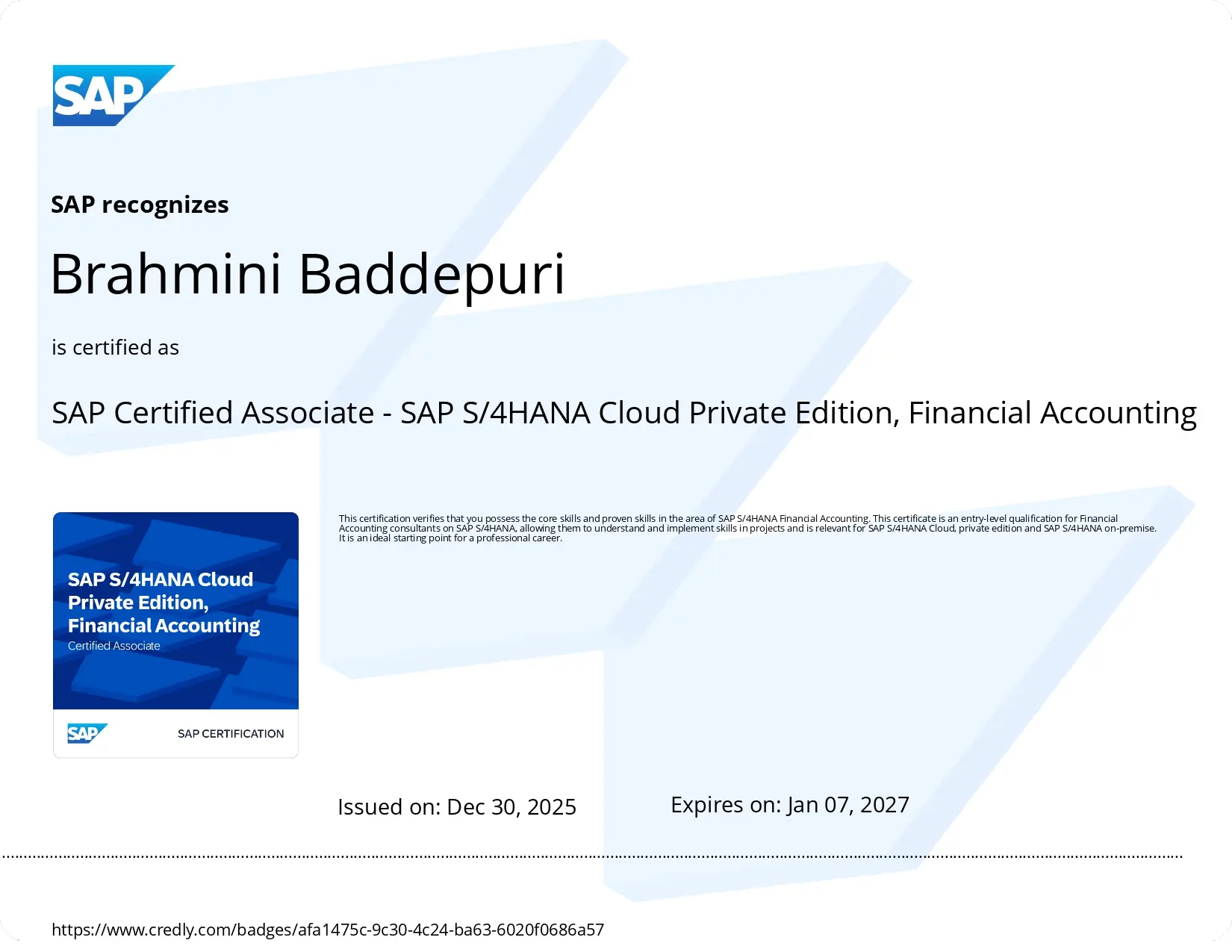
Brahmini Baddepuri
SAP Certified Associate — SAP S/4HANA Cloud Private Edition, Financial Accounting
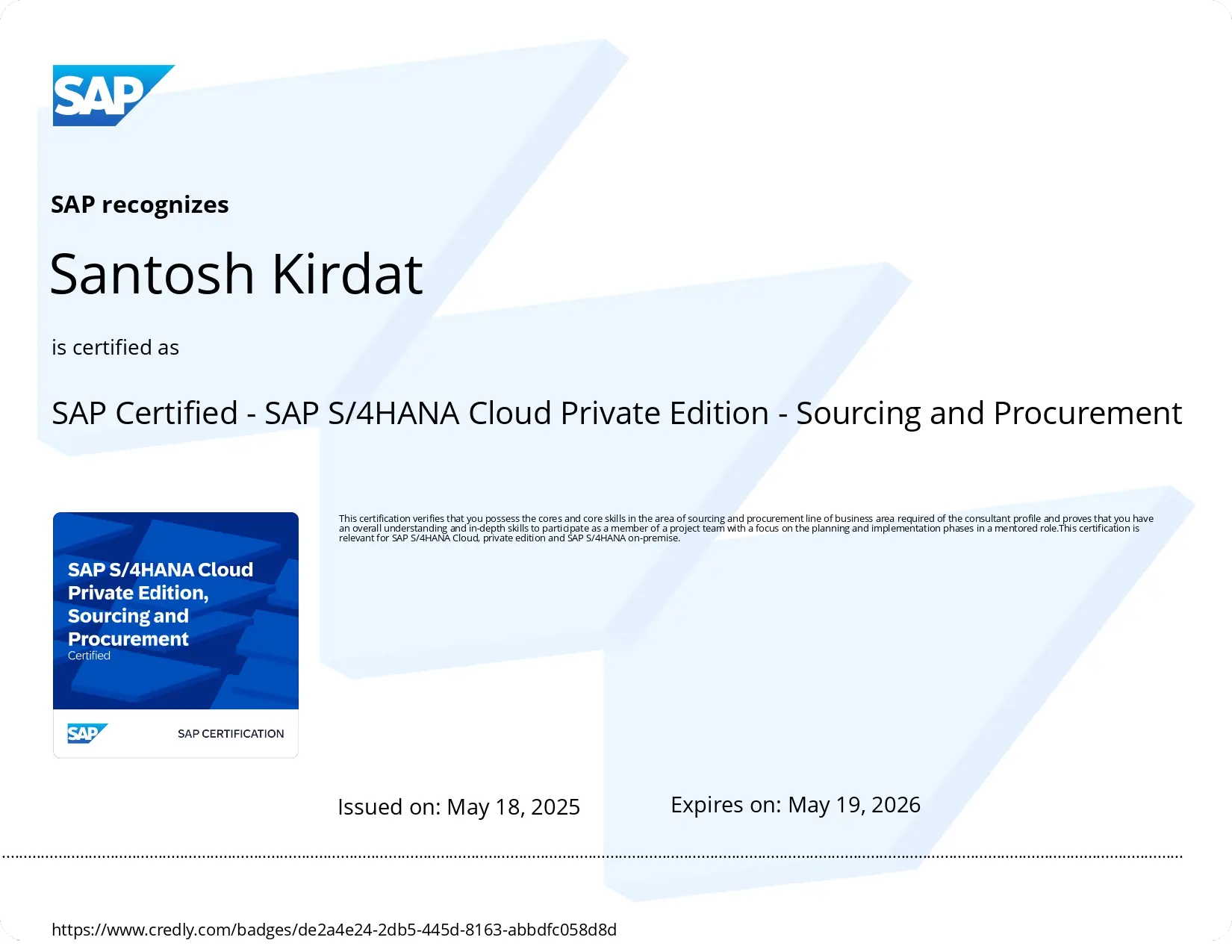
Santosh Kirdat
SAP Certified — SAP S/4HANA Cloud Private Edition, Sourcing and Procurement
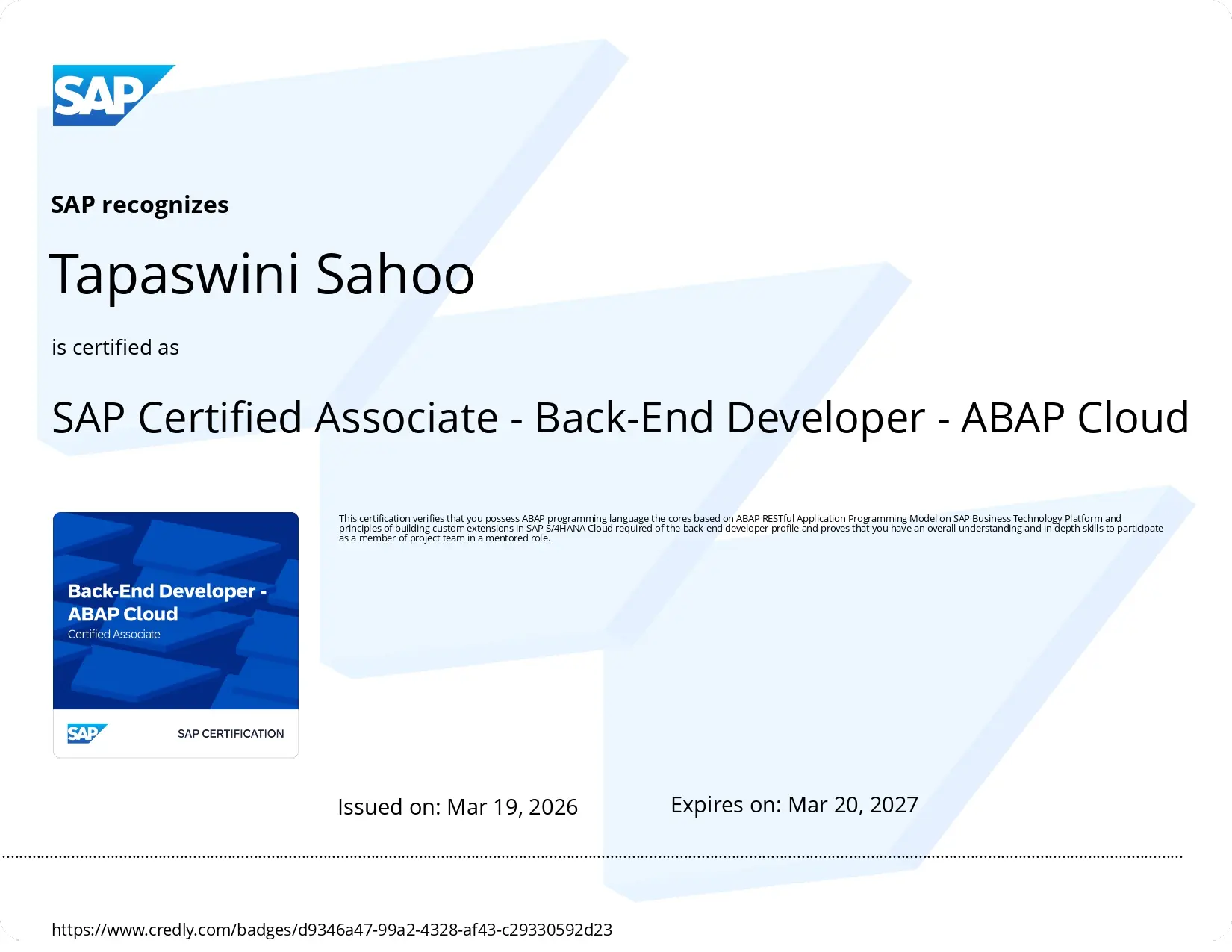
Tapaswini Sahoo
SAP Certified Associate — Back-End Developer, ABAP Cloud
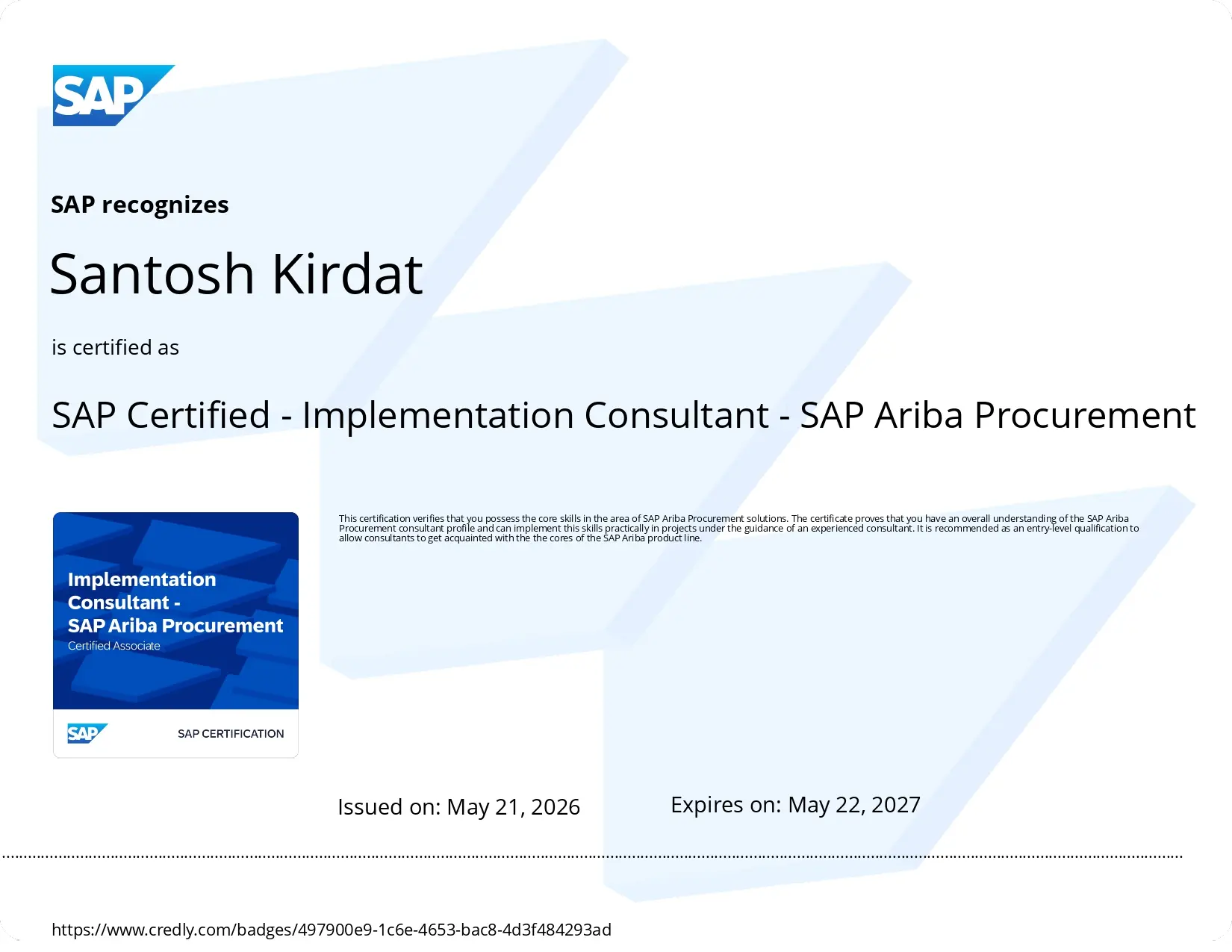
Santosh Kirdat
SAP Certified — Implementation Consultant, SAP Ariba Procurement
Explore Advanced SAP HANA Modelling Content Designed for Professionals
SAP HANA Modelling drives deeper insights through sophisticated schema design. The curriculum covers over 30 hands‑on labs, including graph data modeling and predictive analytics using PAL.
• Overview of SAP HANA Modelling evolution
• Differences between Classic and HANA 2.0 modeling
• Code push-down concept
• Role of modeling in real-time analytics
• End-to-end HANA modeling lifecycle
• SAP HANA 2.0 system architecture
• In-memory processing concepts
• Column store vs row store
• XS Advanced and development landscape
• Architecture supports high-performance analytics
• Introduction to CDS views
• CDS vs calculation views
• Annotations and semantics
• Associations and joins
• CDS enables semantic-rich modeling
• Measures, attributes, and hierarchies
• Input parameters and variables
• Calculated columns and restricted measures
• Union and aggregation nodes
• Advanced modeling supports complex analytics
• SQL fundamentals for SAP HANA
• SQLScript procedures and functions
• Table functions and views
• Performance-optimized SQL design
• SQLScript enhances modeling flexibility
• Smart Data Access (SDA) overview
• Smart Data Integration (SDI) basics
• Virtual vs replicated data models
• Data source connectivity
• Integration ensures unified data access
• Analytic privileges
• Role-based access control
• Authorization in CDS and calculation views
• Data masking and security concepts
• Security ensures controlled data exposure
Beyond Learning
We empower you with skills that land your dream job.
Meet Your Mentors
Master SAP HANA Modelling with Expert Guidance
SAP HANA Modelling benefits from expert guidance throughout the course. ZeblearnIndia’s advisory panel includes senior SAP architects who review your models and provide three personalized optimization reports.
Ekta
Workday HCM / HR Trainer
Workday HCM and HR training specialist covering the complete employee lifecycle from hire to termination. Combines core HCM configuration with HR domain knowledge, focusing on real-time scenarios, security and reporting for job-ready outcomes.
Gaurav Ravsaheb Unde
SAP MM Trainer
Seasoned SAP MM expert specializing in procurement, inventory management, and MRP planning. Delivers hands-on training with real project scenarios for certification and job readiness.
HM
Harrison Manoj
Workday HCM Trainer
Workday HCM consultant focusing on compensation, advanced compensation and talent management. Experienced in merit cycles, bonus and stock plans, performance reviews and goal management, with a strong emphasis on real interview scenarios and live tenant demos.
Shariq Khan
Senior SAP FICO Trainer
SAP FICO analyst with strong knowledge of GL, AP, AR, asset accounting, and SAP configuration support.
Kiran S M
SAP EWM Trainer
SAP EWM expert in Extended Warehouse Management. Covers warehouse structure, stock handling, labor management, and RF integration for logistics optimization.
Harshal Chavhan
SAP Ariba Trainer
SAP Ariba specialist in sourcing, procurement, and supplier management solutions. Covers contract management, guided buying, and cloud integrations for end-to-end P2P automation.
Naresh
SAP Basis HANA Trainer
SAP Basis expert specializing in HANA database, ECC migrations, system administration, and performance optimization. Covers transports, backups, and security management.
Laxmikant
SAP MM Trainer
Experienced SAP MM consultant focusing on purchase orders, inventory control, and pricing conditions. Provides practical training for manufacturing implementations.
Amol
SAP PLM Trainer
SAP PLM expert in recipe development, document management, and engineering change management. Covers pharma/chemical industry compliance.
Subhashree Mahapatra
Senior SAP FICO Trainer
Finance expert with deep SAP FICO knowledge, focusing on financial reporting, compliance, and SAP best practices.
Interview Prep
Ace SAP HANA Modelling Interviews Using Proven Techniques
SAP HANA Modelling interview prep focuses on explaining optimization techniques to senior architects. You will practice articulating the impact of push‑down processing, reducing data movement by up to 40%.
Why Mock Interviews Matter?
Practice real-world interview scenarios with expert mentors and industry leaders. Improve your confidence and get ready to crack your dream role.
Real‑World SAP HANA Modelling Projects That Boost Your Portfolio
SAP HANA Modelling projects in the curriculum require you to build end‑to‑end data pipelines. One assignment has you integrate real‑time sensor data into a CDS view, delivering sub‑second refresh rates.
Project
Reliance SAP S/4HANA Transformation
Enterprise-wide SAP S/4HANA migration across manufacturing, retail & petrochemical divisions with 500+ users
How SAP HANA Modelling Skills Are Evaluated in Our Advanced Course?
SAP HANA Modelling is tested through scenario‑based labs that mirror enterprise challenges. You will design a multi‑dimensional view using calculation views and achieve a 30% query performance gain.
Zeblearnindia Learning is a premier institute offering training in SAP, Workday, Data Science, Full-Stack Development, Salesforce, Machine Learning, Software Testing and more — available both online and in classroom, for students, working professionals and entrepreneurs.
Master SAP HANA Modelling with Advanced Techniques
SAP HANA Modelling offers a unique advantage through ZeblearnIndia’s proprietary HANA Modeling sandbox, providing 200 GB of in‑memory data for hands‑on practice.
Evaluation & Practice Sessions
Participate in expert-led mock interviews and skill evaluation sessions after program completion.
Learning Simulation (LMS)
Lifetime access to LMS with recorded sessions, hands-on practice, and updated learning resources.
Career & Placement Assistance
Resume building, profile optimization, interview preparation, and placement guidance from industry experts.
Live Sessions
60-Minute Free Webinar with Certificate
Join our live sessions and earn a free certificate. Limited seats available!
Upcoming Live Classes
Sessions from
Live & Open
Date
Time IST
Course / Module
Register
Loading upcoming sessions...
Student Portal
Everything your batch needs, in one place
Live classes, recordings, daily practice, case studies and progress tracking —
all inside your portal, on any device.
Live classes, one-click joinNext class, time and link with a live countdown
Every session recordedRevisit any class you missed, any time
Daily T-CodesA fresh set of SAP transaction codes every day
Daily interview questionsNew questions daily, answers hidden until you try
Daily SAP updatesRelease changes and certification news as it happens
Real business case studiesScenarios you configure yourself, step by step
Hands-on live projectsEnd-to-end work you can talk about in interviews
Complete resource libraryVideos, notes, PDFs, ebooks and question banks
Progress & attendanceTrack topics, sessions and your attendance record
Doubts answered by trainersAsk against a class, get a reply on the same thread
Global certification supportExam codes, mock tests and booking guidance
Alumni networkReferrals and interview intel from placed students
Enroll Today
SAP HANA Modelling 2.0 Training Program — Flexible Batches For You
Status
Date
Type
Schedule
Time
SOLD OUT
24 Oct 2026
Weekend
SAT - SUN (08 Weeks)
18:00 - 20:00
FILLING FAST
29 Oct 2026
Weekday
MON - FRI (08 Weeks)
08:00 - 10:00
AVAILABLE
3 Nov 2026
Weekend
SAT - SUN (08 Weeks)
10:00 - 12:00
Limited Time Offer
₹120,000
₹100,000
You save ₹20,000
EMI options available · No-cost study now, pay later
SAP HANA Modelling 2.0 Training & Course in India
Build practical expertise in SAP HANA Modelling 2.0 with structured training covering HANA data modeling, calculation views, graphical modeling, SQL, CDS, joins, unions, aggregations, star joins, input parameters, variables, hierarchies, performance optimization, security, deployment, and troubleshooting.
SAP HANA Modelling 2.0 Training is designed for professionals who want to build strong skills in designing and developing analytical data models on SAP HANA. The course focuses on how raw business data is transformed into reusable semantic models that can support reporting, analytics, applications, and enterprise decision-making.
Learners develop practical knowledge of SAP HANA calculation views, modeling nodes, data sources, joins, unions, projections, aggregations, calculated columns, filters, parameters, variables, hierarchies, and advanced modeling techniques while also understanding performance and security considerations.
What is SAP HANA Modelling 2.0?
SAP HANA Modelling is the process of designing reusable data models within SAP HANA to organize, transform, combine, and expose business information for analytical and application requirements.
Modern HANA modeling commonly uses calculation views and other database modeling techniques to create semantic models over business data. These models can combine information from multiple sources, apply calculations and transformations, and provide a structured layer for analytical consumption.
In this training, learners understand how to design efficient HANA models while considering data relationships, performance, reusability, security, and business requirements.
Why Learn SAP HANA Modelling 2.0 in 2026?
SAP HANA continues to play an important role in SAP's data and application landscape. Strong modeling skills are valuable for professionals working with analytics, SAP S/4HANA, data warehousing, reporting, application development, and SAP data platforms.
Build strong SAP HANA data-modeling fundamentals.
Learn modern calculation-view development.
Understand graphical and SQL-based modeling concepts.
Work with joins, unions, projections, and aggregations.
Learn input parameters and variables for dynamic models.
Understand advanced modeling and semantic concepts.
Learn performance optimization techniques.
Understand HANA security and analytic privileges.
Develop practical skills for SAP HANA modeling roles.
What You Will Learn in SAP HANA Modelling 2.0 Training
SAP HANA Overview – Understand SAP HANA architecture, in-memory computing, database concepts, and its role in modern SAP landscapes.
HANA Modeling Fundamentals – Learn the purpose, principles, and lifecycle of data modeling in SAP HANA.
Data Modeling Concepts – Understand dimensions, measures, attributes, relationships, and semantic modeling.
HANA Development Environment – Learn the fundamentals of working with modern HANA development tools.
HANA Database Objects – Understand tables, views, schemas, procedures, functions, and modeling artifacts.
HANA Tables – Learn how structured business data is stored and accessed within HANA.
Column Store – Understand column-oriented storage and its importance for analytical workloads.
SQL Fundamentals – Learn SQL concepts required for querying and modeling HANA data.
SQLScript Fundamentals – Understand SQLScript concepts relevant to HANA development and advanced data processing.
Graphical Calculation Views – Learn how to create and design calculation views using graphical modeling techniques.
Calculation View Architecture – Understand the structure and components of calculation views.
Data Sources – Learn how tables and other data sources can be incorporated into HANA models.
Projection Node – Understand how projection nodes select and prepare required columns and data.
Join Node – Learn how data from multiple sources can be combined using joins.
Union Node – Understand how datasets with compatible structures can be combined using unions.
Aggregation Node – Learn how measures can be aggregated within calculation views.
Rank Node – Understand ranking concepts and how ranking logic can support analytical models.
Star Join – Learn star-join modeling concepts for analytical scenarios involving fact and dimension data.
Join Types – Understand inner joins, left outer joins, right outer joins, and other relevant join concepts.
Cardinality – Learn the importance of relationship cardinality when designing HANA models.
Calculated Columns – Understand how derived values can be created within models.
Calculated Measures – Learn how business calculations can be applied to analytical data.
Restricted Measures – Understand how measures can be restricted according to specific business conditions.
Filters – Learn how filters can reduce and control the data returned by a model.
Input Parameters – Understand how input parameters allow users or applications to provide dynamic values to models.
Variables – Learn how variables can support dynamic filtering and analytical requirements.
Prompt Handling – Understand concepts related to parameter and variable input during analytical consumption.
Hierarchies – Learn how hierarchical business relationships can be represented within HANA models.
Attribute Hierarchies – Understand hierarchy concepts for dimensions and master-data relationships.
Time Modeling – Learn how date and time information can be incorporated into analytical models.
Currency Conversion – Understand important concepts involved in currency-based analytical calculations.
Unit Conversion – Learn how quantity and unit-related transformations can support analytical reporting.
Semantic Layer – Understand how HANA models provide business meaning to technical data structures.
Associations – Learn how associations can represent relationships between modeled entities.
CDS Views – Understand the role of Core Data Services in SAP data modeling and how CDS concepts relate to HANA models.
HANA Native Development – Learn important concepts involved in developing data-intensive applications directly on HANA.
Reusable Models – Understand how modular and reusable modeling approaches improve maintainability.
Nested Calculation Views – Learn how calculation views can be combined to create layered analytical models.
Model Layering – Understand logical and semantic layers used to organize complex HANA models.
Analytical Modeling – Learn how HANA models can support dashboards, reporting, analytics, and business applications.
Performance Optimization – Understand techniques for designing efficient and high-performing HANA models.
Query Performance – Learn how model structure, joins, filters, calculations, and data volume can affect performance.
Filter Pushdown – Understand the importance of processing filters efficiently within the database.
Join Optimization – Learn practical considerations for designing efficient joins.
Aggregation Optimization – Understand how aggregation design can affect analytical query performance.
Data Volume Management – Learn modeling considerations for large datasets and high-volume analytical workloads.
HANA Security Fundamentals – Understand the basics of securing data and modeling objects.
Analytic Privileges – Learn how row-level access restrictions can be applied to analytical data.
Object Privileges – Understand access control concepts for database and modeling objects.
Role Management – Learn how roles support controlled access to HANA resources.
Deployment – Understand how HANA modeling artifacts move from development into productive environments.
Transport Concepts – Learn important concepts related to transporting HANA development content.
Version Management – Understand development lifecycle and version-control considerations.
Testing and Validation – Learn how HANA models can be tested against functional and business requirements.
Data Preview – Understand how model results can be analyzed during development and validation.
Debugging – Learn approaches for investigating modeling and data-processing issues.
Error Handling – Understand common modeling errors and functional troubleshooting approaches.
Model Documentation – Learn how to document model logic, dependencies, calculations, and business requirements.
Real-World SAP HANA Modeling Scenarios – Practice building analytical models using business data, joins, calculations, filters, parameters, and advanced modeling techniques.
Who Should Join SAP HANA Modelling 2.0 Training?
This course is suitable for professionals who want to build practical SAP HANA data-modeling skills. It can be useful for:
SAP HANA Consultants
SAP HANA Modelers
SAP HANA Developers
SAP Technical Consultants
SAP BW Professionals
SAP Analytics Professionals
SAP S/4HANA Technical Professionals
Data Warehouse Professionals
BI Developers
Database Developers
Data Analysts with SQL experience
Professionals transitioning into SAP HANA careers
Career Opportunities After SAP HANA Modelling 2.0 Training
Practical knowledge of SAP HANA modeling can support career opportunities across data modeling, analytics, database development, SAP technical consulting, business intelligence, and SAP data-platform projects.
SAP HANA Modeler
SAP HANA Consultant
SAP HANA Developer
SAP HANA Technical Consultant
SAP HANA Data Modeler
SAP BI Developer
SAP Analytics Consultant
SAP BW/HANA Consultant
SAP Data Warehouse Consultant
SAP HANA Support Consultant
SAP HANA Modelling Certification & Career Preparation
Our SAP HANA Modelling 2.0 Training helps learners develop practical skills in designing analytical data models using SAP HANA. The program combines modeling concepts with hands-on scenarios involving calculation views, joins, aggregations, calculated measures, parameters, variables, hierarchies, security, and performance optimization.
Learners can also receive a ZebLearn course completion certificate and career-oriented guidance to help demonstrate their training and prepare for relevant SAP HANA modeling opportunities.
Why Choose ZebLearn India for SAP HANA Modelling 2.0 Training?
Strong focus on calculation views and graphical modeling.
Coverage of joins, unions, projections, and aggregations.
Input parameters, variables, calculations, and hierarchies.
Performance optimization and query-design concepts.
Security and analytic privilege fundamentals.
Deployment, transport, testing, and troubleshooting coverage.
Real-world SAP HANA modeling scenarios.
Guidance for SAP HANA career opportunities.
Course completion certification from ZebLearn.
Start Your SAP HANA Modelling Career
Build practical data-modeling expertise with SAP HANA Modelling 2.0 Training. From HANA fundamentals and SQL to calculation views, joins, unions, aggregations, parameters, variables, hierarchies, performance optimization, security, and deployment, this course helps you develop the skills needed to create efficient and reusable SAP HANA data models.
Join ZebLearn India's SAP HANA Modelling 2.0 Training and develop the technical skills needed to work confidently with SAP HANA data modeling, analytics, SAP S/4HANA environments, and modern enterprise data solutions.
FAQ
Frequently Asked Questions
Find answers to common questions about our SAP HANA Modelling, ZeblearnIndia, data modeling training, SAP HANA 2.0, advanced SAP course, certifications, and courses.
SAP HANA Modelling 2.0 is the advanced data modeling approach used in SAP HANA to design, optimize, and manage calculation views using the latest HANA architecture and development tools. It focuses on graphical and SQL-based modeling techniques that enable real-time analytics, complex data transformations, and high-performance reporting directly on in-memory data. SAP HANA Modelling 2.0 helps organizations build scalable analytical models, simplify data structures, and deliver fast and accurate insights across business domains.
SAP HANA Modelling 2.0 training at ZebLearn is suitable for SAP HANA developers, data engineers, analytics consultants, BI professionals, ABAP developers, database administrators, fresh graduates, and IT professionals who want to specialize in advanced HANA data modeling and real-time analytics. It is also ideal for individuals working in data warehousing, reporting, S/4HANA analytics, and enterprise performance management projects.
Prior knowledge of SQL, relational databases, or basic SAP HANA concepts is highly recommended to learn SAP HANA Modelling 2.0 at ZebLearn. The training begins with HANA architecture fundamentals and modeling basics before introducing advanced calculation view techniques and performance optimization concepts. Learners with experience in SAP BW, ABAP CDS, or database development will find it easier to adapt to advanced modeling scenarios.
The SAP HANA Modelling 2.0 training program at ZebLearn covers essential topics such as HANA architecture and XS advanced, calculation view design using graphical and SQL scripting, star schema and dimensional modeling, joins and unions, hierarchies, variables and parameters, analytic privileges, currency and unit conversions, table functions, performance tuning, versioning and transport management, integration with SAP S/4HANA, SAP BW, SAP Analytics Cloud, and real-world analytical modeling scenarios. The course also focuses on best practices for scalable and reusable data models.
SAP HANA Modelling 2.0 differs from classical HANA modeling by using calculation views as the unified modeling object, eliminating attribute and analytic views, and supporting both graphical and SQL-based development in a modern design environment. It provides better performance, simpler lifecycle management, enhanced security, and seamless integration with CDS views and S/4HANA embedded analytics, making it the preferred modeling approach for current SAP landscapes.
Yes, the SAP HANA Modelling 2.0 course at ZebLearn includes hands-on practical training along with conceptual learning. Learners work on real-time scenarios such as building calculation views, implementing complex joins and aggregations, designing hierarchies, applying analytic privileges, optimizing query performance, and publishing models for reporting tools, which helps them understand how modern HANA modeling works in live enterprise environments.
After completing SAP HANA Modelling 2.0 training, learners can pursue roles such as SAP HANA Developer, Data Modeling Consultant, BI Technical Specialist, Analytics Architect, SAP S/4HANA Analytics Consultant, and Database Engineer in IT services companies, consulting firms, analytics providers, and large enterprises. These roles are in high demand as organizations increasingly adopt real-time analytics and in-memory data platforms.
SAP HANA Modelling 2.0 improves reporting performance and analytical flexibility by enabling push-down of complex calculations to the database layer, reducing data redundancy, optimizing joins and aggregations, and supporting real-time data access. This eliminates batch processing delays, accelerates query execution, improves data consistency, and allows business users to analyze up-to-date information instantly.
ZebLearn provides complete certification guidance and interview preparation support for SAP HANA Modelling 2.0 training. Learners receive assistance with modeling scenarios, performance tuning exercises, architecture concepts, resume preparation, and commonly asked technical interview questions, helping them prepare confidently for analytics and SAP technical consulting roles.
SAP HANA Modelling 2.0 offers strong long-term career growth as organizations continue investing in S/4HANA transformations, embedded analytics, real-time reporting, and advanced data platforms. Professionals with HANA modeling expertise are highly valued for data modernization projects, analytics architecture roles, and enterprise digital transformation initiatives.