Master the Indonesian Language with Expert Guidance!
Are you interested in learning Indonesian for travel, work, or personal growth? Our Indonesian Language Training Program is designed for learners at all levels, from beginners to advanced, helping you gain fluency in Bahasa Indonesia with structured lessons and practical exercises.
Whether you are searching for Indonesian language classes near me or a free Indonesian language course online, ZeblearnIndia provides the best resources to help you learn to speak Indonesian confidently.
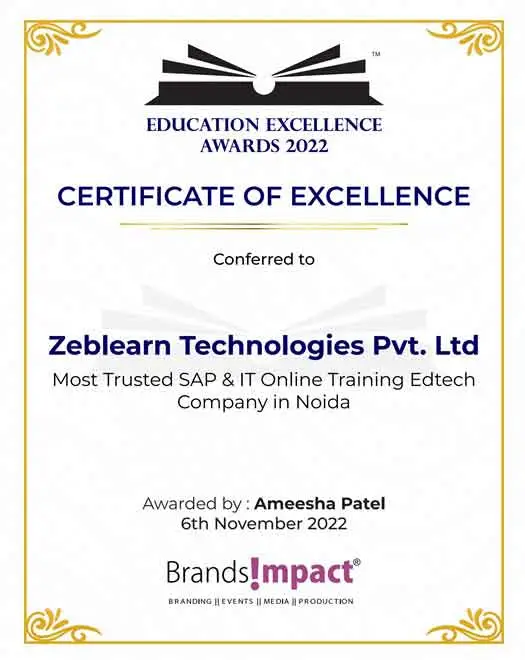
ZebLearn partners with leading industry experts to offer genuine, career-focused certifications in SAP training, foreign languages, and professional development courses. Earn internationally recognized credentials, enhance your career prospects, and distinguish yourself with certifications valued by the industry.
Course content
About Master the Indonesian Language with Expert Guidance!
Course Overview
Objectives: To introduce learners to the basics of the Indonesian language, enabling them to understand and use simple expressions in everyday situations.
Target Audience: Beginners with no prior knowledge of the Indonesian language.
Basic Vocabulary and Expressions
Common greetings and polite expressions (e.g., "Selamat pagi" for "Good morning").
Essential vocabulary related to personal information (name, age, nationality).
Numbers, days of the week, and basic time expressions.
Common nouns related to family, food, clothing, and daily activities.
Fundamental Grammar Concepts
Introduction to basic sentence structure (Subject-Verb-Object).
Use of simple present tense for daily routines.
Understanding of common pronouns (e.g., saya - I, kamu - you).
Formation of simple questions and negations (e.g., "Apakah kamu suka...?").
Listening and Speaking Skills
Listening to simple dialogues and conversations.
Practicing pronunciation and intonation through repetition and role-playing.
Engaging in basic conversations about personal interests and daily routines.
Using simple phrases to express likes, dislikes, and preferences.
Reading and Writing Skills
Reading short texts and dialogues to comprehend simple information.
Writing basic sentences and short paragraphs about oneself and familiar topics.
Filling out simple forms (e.g., personal information forms).
Recognizing and writing common Indonesian words and phrases.
Course Overview
Objectives: To build on the foundations of the Indonesian language, enhancing learners' ability to communicate in more complex situations and understand basic written texts.
Target Audience: Learners who have completed the A1 level or have basic knowledge of Indonesian.
Expanded Vocabulary and Expressions
Vocabulary related to hobbies, travel, weather, and daily routines.
Expressions for giving opinions, making requests, and asking for help.
Descriptive adjectives for people, places, and objects.
Common phrases for expressing emotions and feelings.
Grammar Concepts
Introduction to more complex sentence structures (e.g., compound sentences).
Use of the past tense (simple past) to describe past events.
Introduction to conjunctions (e.g., dan - and, tetapi - but).
Usage of common adverbs of time, place, and manner.
Listening and Speaking Skills
Listening to longer dialogues and short stories.
Engaging in role-plays that involve everyday scenarios (e.g., ordering food, asking for directions).
Practicing pronunciation with focus on intonation and stress in sentences.
Conversations about personal experiences, preferences, and future plans.
Reading and Writing Skills
Reading simple texts, such as short articles and emails.
Writing longer sentences and short paragraphs on familiar topics (e.g., describing a favorite place).
Composing simple dialogues and letters (formal and informal).
Understanding and writing basic narratives about past experiences.
Course Overview
Objectives: To enhance learners' proficiency in Indonesian, enabling them to engage in conversations on a wider range of topics and understand more complex texts.
Target Audience: Learners who have completed the A2 level or have an intermediate understanding of Indonesian.
Vocabulary Expansion
Vocabulary related to work, education, technology, and social issues.
Expressions for discussing experiences, aspirations, and hypothetical situations.
Terminology for discussing health, travel, and leisure activities.
Common idiomatic expressions and colloquialisms used in everyday conversation.
Grammar Concepts
Introduction to the future tense and conditional sentences.
Understanding passive voice and its usage in different contexts.
Use of conjunctions and transition words to connect ideas (e.g., karena - because, sehingga - so).
Exploring comparative and superlative forms of adjectives.
Listening and Speaking Skills
Listening to news broadcasts, podcasts, and interviews for comprehension.
Engaging in discussions and debates on various topics, encouraging critical thinking.
Practicing pronunciation with a focus on fluency and natural speech patterns.
Presenting opinions and arguments in a structured manner during conversations.
Reading and Writing Skills
Reading longer texts, such as articles, short stories, and narratives.
Writing detailed paragraphs and essays on familiar topics (e.g., personal experiences, opinions).
Composing emails, reports, and summaries.
Understanding different genres of writing in Indonesian literature.
Course Overview
Objectives: To develop advanced proficiency in Indonesian, allowing learners to communicate effectively in a variety of contexts, comprehend complex texts, and express nuanced opinions.
Target Audience: Learners who have completed the B1 level or possess an upper-intermediate understanding of Indonesian.
Vocabulary Development
Expansion of vocabulary related to specialized topics such as business, technology, health, and politics.
Phrasal verbs and idiomatic expressions used in both formal and informal contexts.
Vocabulary for discussing abstract concepts and expressing emotions and opinions.
Introduction to colloquial language and slang commonly used in contemporary Indonesian.
Advanced Grammar Concepts
In-depth study of complex sentence structures, including relative clauses and indirect speech.
Mastery of passive voice and its various forms across different tenses.
Use of advanced conjunctions and linking words for more sophisticated sentence construction (e.g., meskipun - although, seandainya - if only).
Understanding subjunctive mood and expressions of doubt, wishes, and hypotheticals.
Listening and Speaking Skills
Listening to authentic materials, such as news reports, podcasts, and documentaries, for comprehension and critical analysis.
Engaging in discussions on abstract topics and current events, supporting arguments with evidence.
Practicing public speaking skills through formal presentations and debates.
Enhancing pronunciation, intonation, and fluency for more natural and confident speech.
Reading and Writing Skills
Reading and analyzing a variety of texts, including literature, essays, and articles, to understand different perspectives and styles.
Writing essays, reports, and articles that demonstrate critical thinking and argumentation skills.
Composing letters, emails, and proposals in a formal and professional tone.
Practice summarizing and paraphrasing complex texts.
Course Overview
Objectives: To achieve a high level of fluency and sophistication in the use of the Indonesian language, enabling learners to participate effectively in academic, professional, and social contexts.
Target Audience: Learners who have completed the B2 level or possess an advanced understanding of Indonesian.
Vocabulary Development
Mastery of advanced vocabulary related to academic fields, professional jargon, and specialized subjects.
Usage of idiomatic expressions and nuanced language for more effective communication.
Familiarization with language variations and registers suitable for different contexts (formal, informal, colloquial).
Development of strategies for learning and using new vocabulary independently.
Advanced Grammar Concepts
Detailed study of complex grammatical structures, including nested clauses and advanced syntactic forms.
Usage of advanced modifiers and conjunctions to express relationships between ideas.
Mastery of the passive voice in various contexts, including impersonal constructions.
In-depth exploration of conditional sentences and nuances of meaning in various contexts.
Listening and Speaking Skills
Listening to complex authentic materials such as academic lectures, expert discussions, and high-level debates to enhance comprehension skills.
Engaging in sophisticated discussions and debates on abstract and complex topics, utilizing critical thinking and persuasive language.
Practice in presenting complex information clearly and coherently in formal and informal settings.
Refinement of pronunciation, stress, and intonation patterns for more natural and expressive speech.
Reading and Writing Skills
Reading and analyzing a wide range of texts, including academic papers, literature, and opinion pieces, to develop critical analysis skills.
Writing research papers, articles, and detailed reports that demonstrate clarity, coherence, and depth of argumentation.
Composing formal letters, proposals, and emails tailored to specific audiences and purposes.
Developing skills in summarizing and critiquing complex texts.
Course Overview
Objectives: To achieve a near-native level of fluency and mastery in the Indonesian language, enabling learners to communicate effectively in all contexts, including professional, academic, and social environments.
Target Audience: Learners who have completed the C1 level or possess an advanced understanding of Indonesian.
Advanced Vocabulary Mastery
Mastery of highly specialized vocabulary and technical terms across various fields such as science, technology, and humanities.
Usage of idiomatic expressions, colloquialisms, and nuanced phrases for enhanced expressiveness in language.
Development of strategies for active vocabulary acquisition and usage, including context-specific language.
Complex Grammar Structures
In-depth analysis and application of advanced grammatical structures, including advanced conjunctions, clauses, and verb forms.
Mastery of idiomatic and figurative language, including metaphorical expressions and nuances.
Use of advanced rhetorical devices for persuasive and effective communication.
Exploration of subtle distinctions in meaning through various grammatical forms and their implications.
Listening and Speaking Proficiency
Engaging with complex spoken texts, including academic lectures, debates, and discussions by native speakers.
Conducting high-level discussions and debates on abstract concepts, socio-political issues, and cultural phenomena.
Mastery of presentation skills for delivering detailed and persuasive arguments in formal settings.
Refinement of accent, intonation, and prosody to achieve a natural and fluent speaking style.
Advanced Reading and Writing Skills
Critical analysis of a diverse range of sophisticated texts, including literary works, journal articles, and historical documents.
Writing comprehensive essays, research articles, and professional reports that demonstrate clarity, depth, and critical engagement with topics.
Composing nuanced and persuasive correspondence for various contexts, including formal and informal settings.
Development of skills in summarizing, synthesizing, and critiquing complex ideas from multiple sources.
What You Will Learn in This Course
📌 Basic Level (A1-A2) – Learning Indonesian for beginners, alphabets, greetings, and everyday phrases.
📌 Reading & Writing Skills – Improve comprehension of Indonesian books, newspapers, and emails.
📌 Cultural & Social Aspects – Why you should learn Indonesian and its importance in global communication.
Why Should You Learn Indonesian Language Training Program Training?
The annual salary of an Indonesian Language Training Program is $125k.
Request more information
What you will get at Zeblearnindia Learning?
Zeblearnindia Learning is a premier institute offering training in SAP Online Courses, Web Designing, Data Science, Full-Stack Development, Salesforce, Workday, Machine Learning, Software Testing, and Video Editing. With the option to choose between online and offline (classroom) learning, our well-structured courses cater to students, working professionals, business owners, and entrepreneurs. Here’s what you can expect at Zeblearnindia Learning: